How to Choose the Right Spice Manufacturer in India for Global Export
Introduction
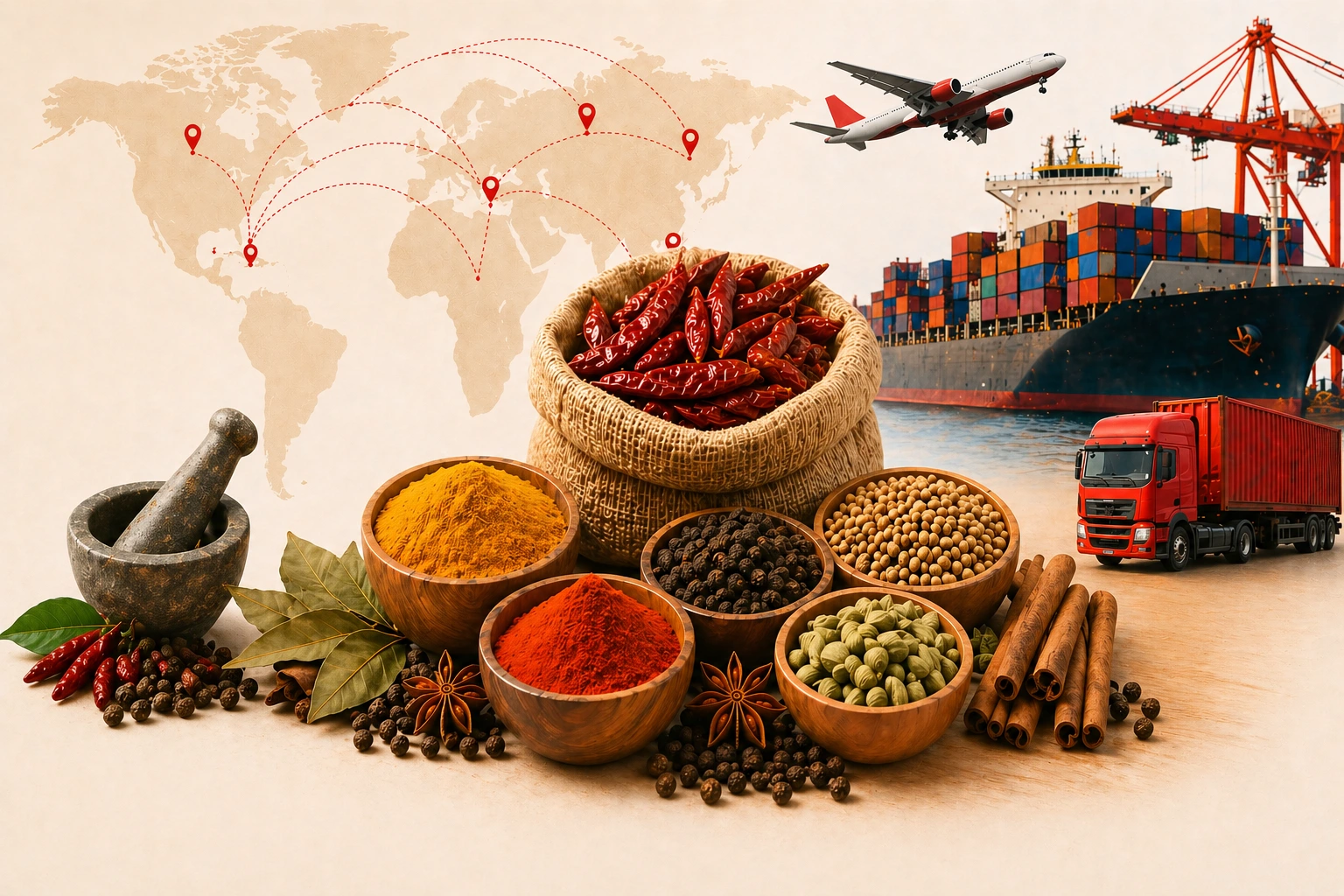
India is the world's largest producer and exporter of spices, supplying chilli, turmeric, herbs, and seasonings to markets across the USA, Europe, the Middle East, and Asia. However, for exporters and global food brands, choosing the right spice manufacturer in India is far more critical than simply finding a supplier.
A reliable manufacturer ensures consistent quality, export compliance, food safety, and long-term scalability — all essential for international markets where rejection rates, shelf-life issues, and regulatory audits can significantly impact business.
1. Verify Manufacturer Status (Not a Trader)
The first and most important step is confirming whether the company is a direct manufacturer or a trading intermediary.
A genuine spice manufacturer:
- Owns and operates a processing facility
- Controls sourcing, cleaning, grinding, blending, and packing
- Maintains in-house quality checks
- Can customize specifications at the production level
2. Evaluate Quality Control & Testing Standards
Export markets demand strict compliance with food safety norms. A professional spice manufacturer must demonstrate robust quality control systems.
Key quality checks exporters should expect:
- Moisture analysis
- ASTA color value (for chilli products)
- Heat value (SHU)
- Mesh size consistency
- Microbiological testing
- Heavy metal and pesticide residue testing
- Certificate of Analysis (COA) per batch
3. Assess Production Capacity & Scalability
Export buyers often require large and repeatable volumes within defined timelines. Choosing a manufacturer with adequate production capacity ensures supply continuity.
4. Customization Capabilities Matter
Global markets demand customized spice profiles depending on cuisine, application, and regulations. A capable manufacturer should offer customization in:
- Chilli heat levels (SHU)
- ASTA color values
- Cut size for chilli flakes
- Mesh size for powders
- Moisture control for shelf-life
- Aroma and blend formulation
5. Processing Technology & Hygiene Standards
Best-in-class spice manufacturers use automated cleaning and grading systems, controlled grinding and blending, dust collection and air-block systems, hygienic handling with minimal human contact, and batch coding and traceability systems.
6. Packaging & Export Readiness
Export-ready spice manufacturers must understand international packaging and documentation requirements including bulk packaging options, moisture-resistant packing, batch coding and traceability, export documentation support, and shelf-life optimization.
7. Export Experience & Market Understanding
Manufacturers with export exposure understand country-specific compliance requirements, shelf-life expectations, buyer audits and inspections, and documentation and quality assurance expectations.
Why Choosing the Right Manufacturer Matters
Selecting the right spice manufacturer directly impacts product acceptance in export markets, brand reputation, long-term sourcing stability, cost control and wastage reduction, and compliance with international food safety laws.
Conclusion
Choosing the right spice manufacturer in India is a strategic decision for exporters and global food brands. By focusing on manufacturing capability, quality control, customization, and export readiness, buyers can build reliable, long-term supply partnerships that support international growth.
Frequently Asked Questions
How do I choose the right spice manufacturer in India for export?
Choosing the right spice manufacturer depends on quality consistency, export experience, certifications, and infrastructure. A reliable company like Sheth Brothers ensures strict quality control, modern processing, and global-standard packaging, making it suitable for export markets.
What certifications should a spice exporter in India have?
A good spice manufacturer should have certifications like ISO, FSSAI, and export compliance standards. These ensure product safety, hygiene, and international acceptance. Sheth Brothers follows stringent quality and safety practices aligned with global requirements.
Why is infrastructure important in a spice manufacturing company?
Infrastructure directly impacts product quality and consistency. Advanced machinery like pulverizers, cleaning systems, and blending units ensure uniform output. Sheth Brothers uses modern equipment and organized facilities to maintain premium standards.
How can I verify the quality of spices before bulk purchase?
You should check color, aroma, moisture content, and purity. Request samples and lab reports if possible. Trusted manufacturers like Sheth Brothers maintain consistent quality through rigorous testing and sourcing from reliable farms.
What makes an Indian spice supplier reliable for long-term business?
Consistency, timely delivery, transparent communication, and scalable production are key factors. Sheth Brothers stands out by offering dependable supply chains and maintaining long-term relationships with clients.
How important is packaging in spice export?
Packaging plays a crucial role in preserving freshness, preventing contamination, and increasing shelf life. Sheth Brothers uses high-quality, export-grade packaging solutions to maintain product integrity during transit.
What are common mistakes when selecting a spice manufacturer?
Common mistakes include choosing based only on price, ignoring quality checks, and not verifying infrastructure. A professional company like Sheth Brothers focuses on quality, process control, and customer satisfaction rather than just cost.
Can Indian spice manufacturers customize blends for businesses?
Yes, many manufacturers offer customized spice blends based on client requirements. Sheth Brothers provides tailored solutions using advanced blending technology to meet specific taste and industry needs.
How does processing technology affect spice quality?
Modern processing ensures better hygiene, uniform grinding, and retention of natural flavor. Sheth Brothers uses advanced machinery to maintain consistency and preserve the natural characteristics of spices.
Why is Sheth Brothers a preferred spice manufacturer in India?
Sheth Brothers is known for its strong infrastructure, quality control systems, reliable sourcing, and customer-focused approach. Their commitment to excellence and consistency makes them a trusted partner for domestic and international clients.
Ready to source premium bulk spices for export? Contact Sheth Brothers for pricing and specifications. MOQ from 500 kg. Ships to 30+ countries.